Can putting a feeling into words calm your brain?
In a 2007 UCLA brain-scan study, naming the emotion in an upsetting picture went with a quieter amygdala. What it found, what it can't say, and how to try it.
By NeuroPulse
It’s almost 10 on a Tuesday night. The dishes are done, a mug is still on the counter, and something feels off. Not sad, exactly. Not angry. Just a low hum.
Then, brushing your teeth, a word shows up: dreading. You’re dreading the 9 am meeting. And the hum gets a little quieter.
Why does one word change how a feeling feels?
An unnamed feeling is slippery. It tints the whole evening and you can’t tell what it’s attached to.
Once it has a word, it has edges. It becomes something you notice instead of something that runs you. Psychologists call this “affect labeling,” which just means putting a feeling into words.
What happens in your brain when you name a feeling?
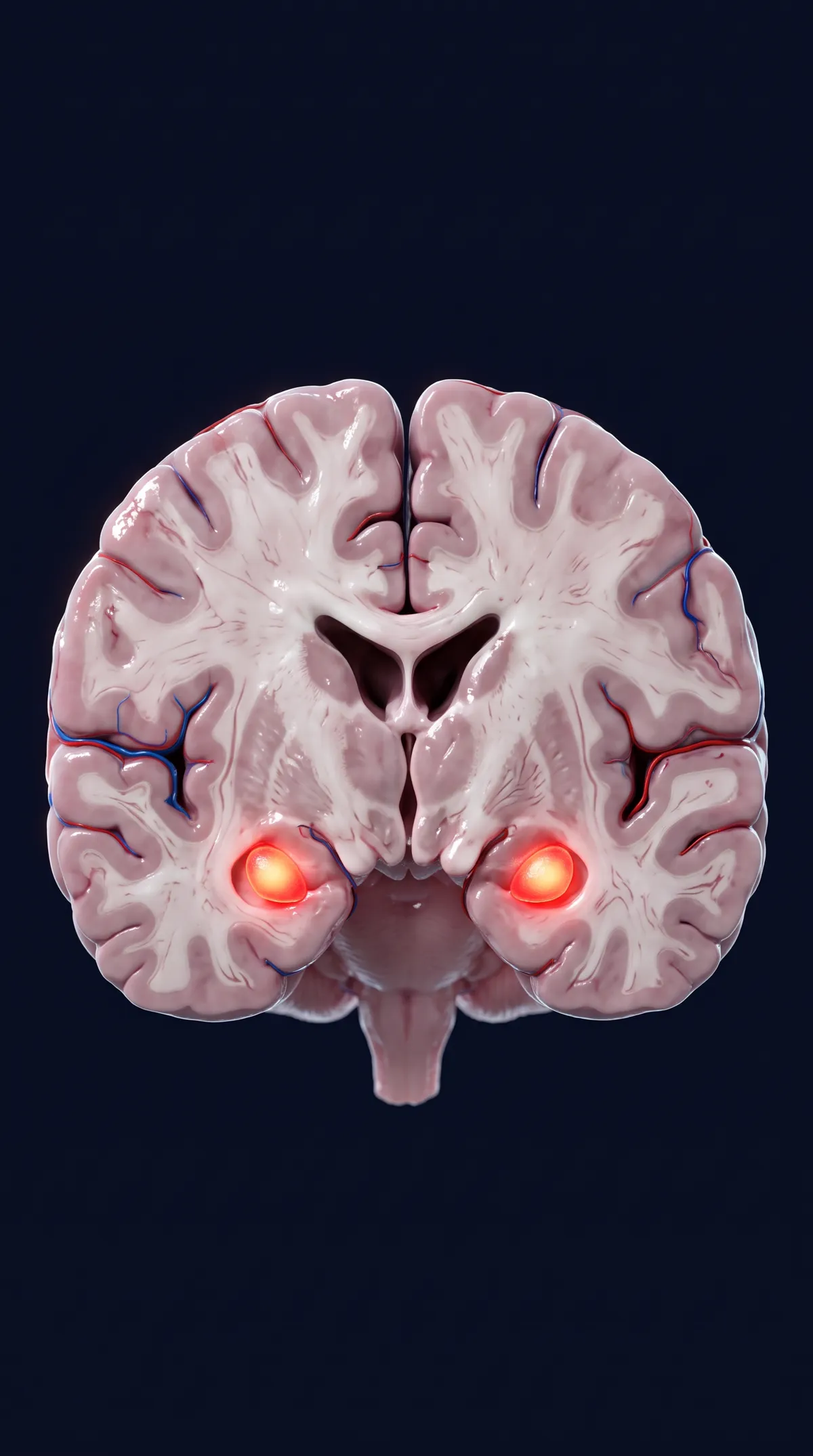
Deep in your brain sits the amygdala. Think of it as a smoke alarm: quick, loud, and happy to go off for burnt toast.
Behind your forehead is the prefrontal cortex, which helps with language and with stepping back from a situation. The idea is that finding a word pulls in this front part of the brain, and that goes with a calmer alarm.

What did the study find?
A team at UCLA led by Matthew Lieberman put volunteers in an fMRI scanner and showed them upsetting pictures (Lieberman et al., Psychological Science, 2007). Sometimes people picked a word for the emotion in the picture. Other times they handled the same kind of picture in a different way, without naming the feeling.
When people named the emotion, the amygdala and other emotion areas responded less to the pictures. One area got more active: a spot on the right side of the prefrontal cortex. And the more that spot lit up, the less the amygdala did.
What this study can’t tell us
A brain scan shows activity, not feelings. This study looked at pictures in a lab, not at your Tuesday night, so it can’t say how well naming works when you’re exhausted or dealing with something big. It also can’t say how long any calming lasts.
How to try naming a feeling today
Keep it to one word. Not a paragraph, not a diagnosis.
- Pause when you notice the hum. While the coffee brews, or before you open that email.
- Pick one word. Nervous, tired, annoyed, lonely, dreading. If it feels off, swap it until it fits.
- Say it or write it. Whisper it, or type it in your notes app. Then carry on with your day.
You don’t have to fix the feeling. You’re only giving it a name.

Who should be careful?
For most people this is a low-risk habit. If you live with depression, trauma or an anxiety disorder, a word on a sticky note doesn’t replace care, and naming a strong feeling can sting at first. Go gently and talk with a licensed professional if it gets heavy. And if the “feeling” is physical, like chest pain or trouble breathing, don’t label it as stress. Get it checked.
Where to go from here
Read next: why a song gets stuck in your head, or why your e-book may delay sleep.
Take our quick brain assessment to find which brain switch is off for you.
FAQ
Does naming your emotions really calm you down?
In the study above, naming the emotion in a picture went with less amygdala activity. That’s a link seen in a scanner, not a promise that you’ll feel calm every time.
What is affect labeling?
Putting a feeling into words, like thinking “I’m nervous.” It’s a way of noticing an emotion instead of letting it run in the background.
What if I can’t tell what I’m feeling?
That’s common. Start with a rough word like tired or tense, then change it if a better one comes. If it’s hard most of the time, a therapist can help you build the skill.
Educational content, not medical advice.