Why does your e-book delay sleep?
In a 2015 Harvard sleep-lab study, 12 adults took about 10 minutes longer to fall asleep after reading on a light-emitting e-reader than after a printed book.
By NeuroPulse
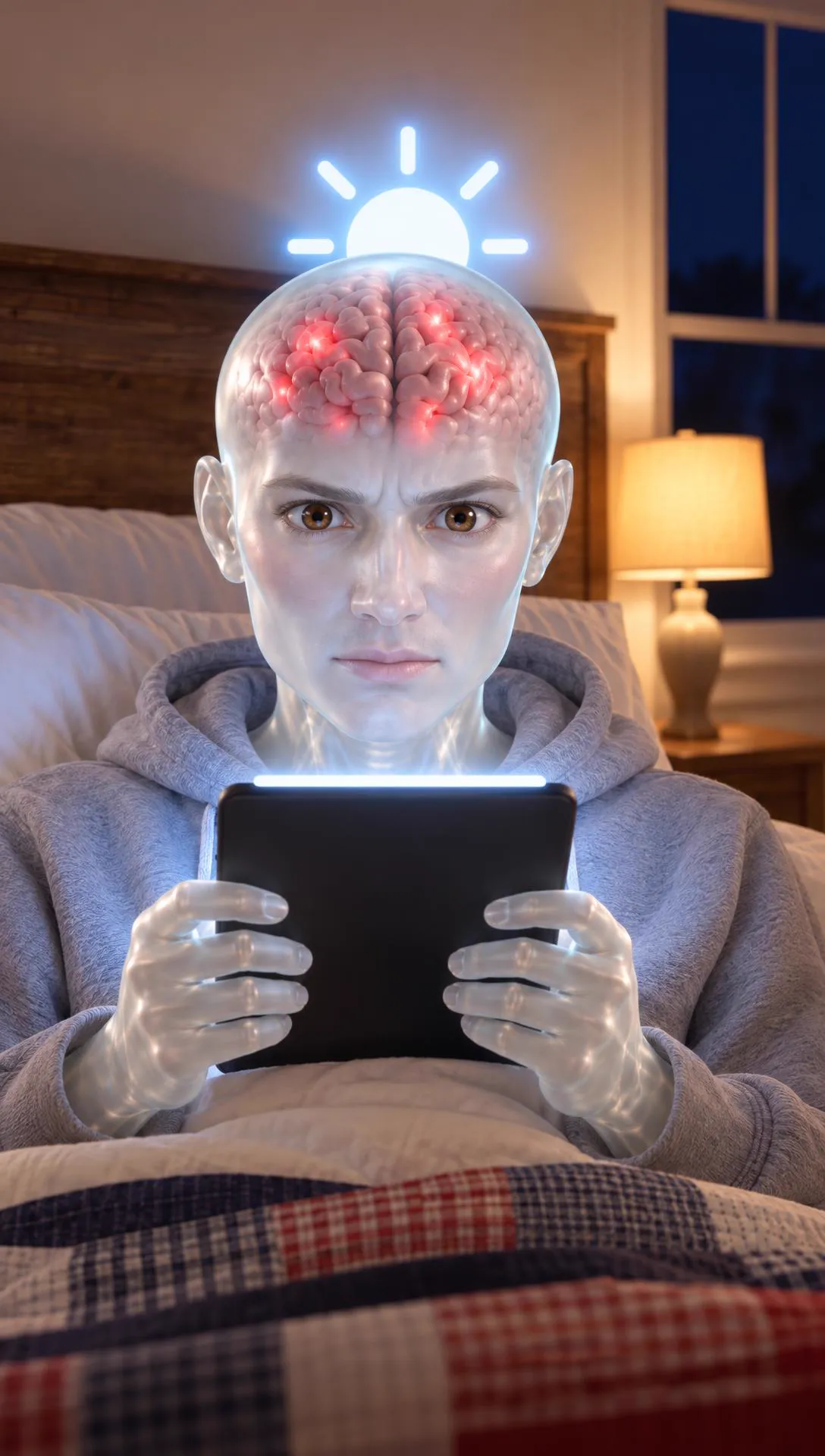
It’s late. You’ve read three chapters on your e-reader, the screen glowing against the sheets, and your eyes finally feel heavy. You switch it off. Then you lie there, wide awake, staring at the ceiling.
The story was relaxing. The light may not have been.
Why can a screen keep you up after a calm story?
Your brain keeps time with a body clock, and it uses light, especially the bright bluish kind, to guess whether it’s day or night.
As evening light fades, your brain releases melatonin, the hormone that tells your body it’s time to wind down. Bright light close to your eyes pushes the other way. Picture a hand nudging the clock’s dial back, so night seems to start later.
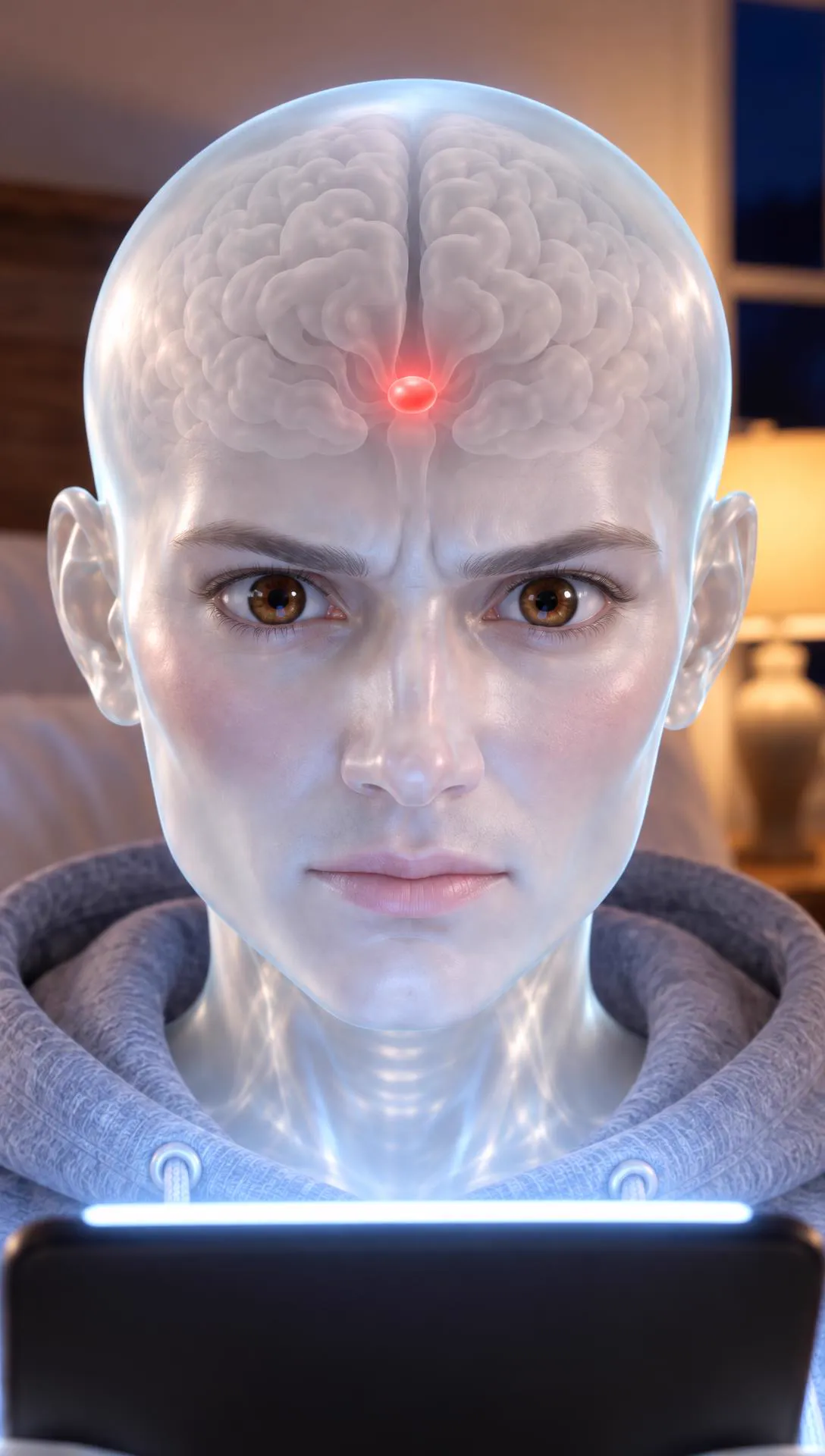
What did the study find?
At Brigham and Women’s Hospital in Boston, 12 healthy young adults lived in a sleep lab for 14 days (Chang et al., PNAS, 2015). For five evenings they read on a light-emitting e-reader for about four hours before bed, in a dimly lit room. For five other evenings they read a printed book in the same dim light.
After the e-reader, they took about 10 minutes longer to fall asleep: roughly 26 minutes against 16. Their evening melatonin was cut by about half, and their body clocks ran more than an hour and a half later. The next morning, they were less alert.
What this study can’t tell us
It was 12 people in a lab, reading for about four hours a night, which is more than most of us read. It didn’t test a dimmer screen, night mode or a shorter reading time, so it can’t say how much those would help.
What’s one habit to try tonight?
Read a printed book in the hours before bed.
- Pick the book now. Put a paperback or library copy on your nightstand before dinner.
- Switch at reading time. Open the printed book instead of the e-reader. Keep the lamp soft.
- Notice what happens. In the morning, jot down roughly how long it took you to drift off.
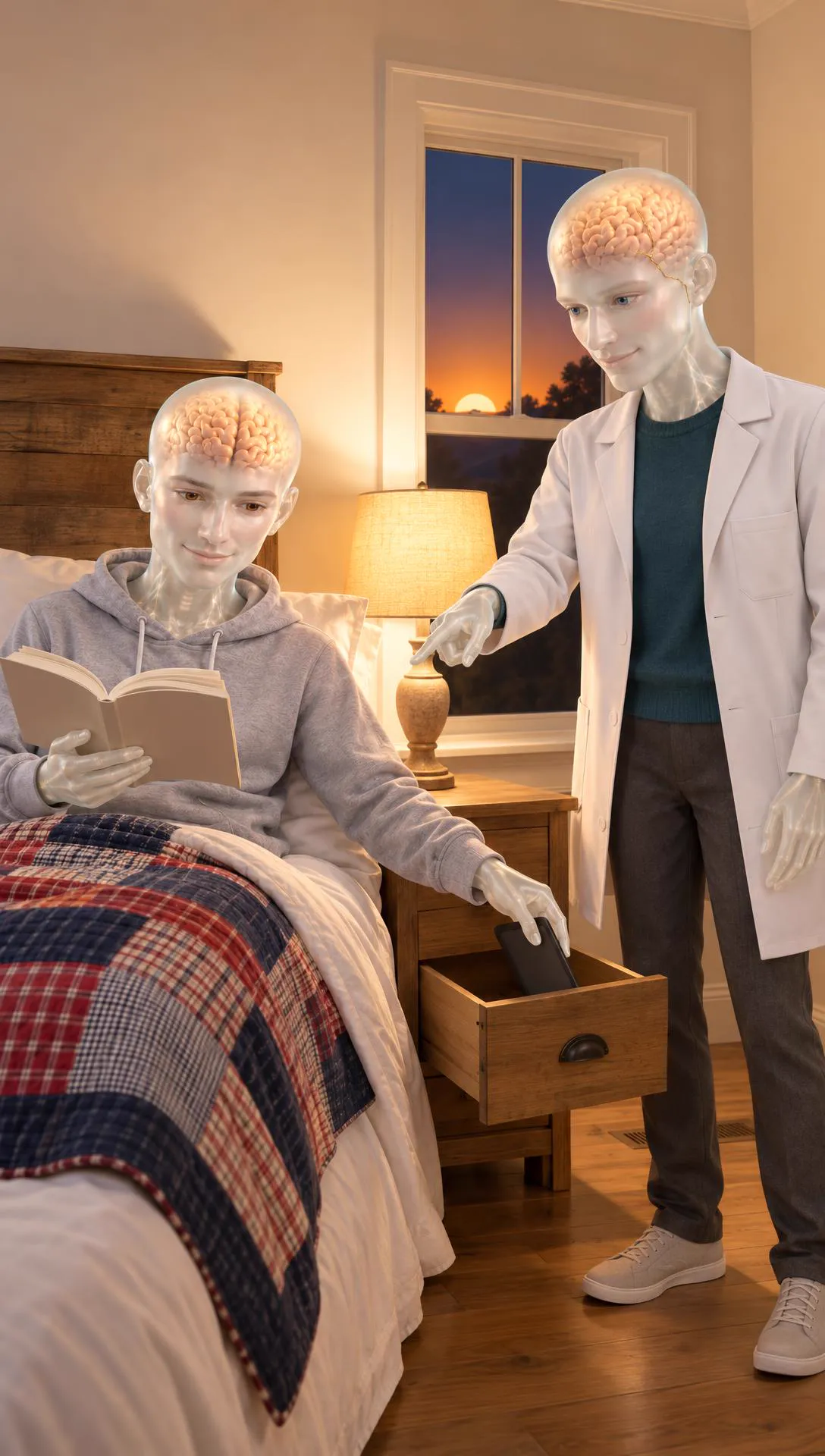
If the story you’re in only exists on the e-reader, try a different book for a few nights and compare.
Who should be careful?
A paper book is a gentle change. If you’ve had trouble sleeping most nights for weeks, see a doctor. A book swap is not a treatment for insomnia.
Where to go from here
For another small bedtime experiment, see two kiwis before bed.
Take our quick brain assessment to find which brain switch is off for you.
FAQ
Does reading an e-book before bed affect sleep?
In the study above, reading on a light-emitting e-reader meant falling asleep about 10 minutes later, less evening melatonin and a later body clock than reading a printed book.
Is a printed book better than an e-reader before bed?
In that study, yes: people fell asleep sooner after the printed book. Results can differ from person to person.
Does night mode help?
This study didn’t test it. If you keep using a screen, lowering the brightness is reasonable, but the printed book is what the research looked at.
Educational content, not medical advice.